
Matter, 2020, 2, 416-427.
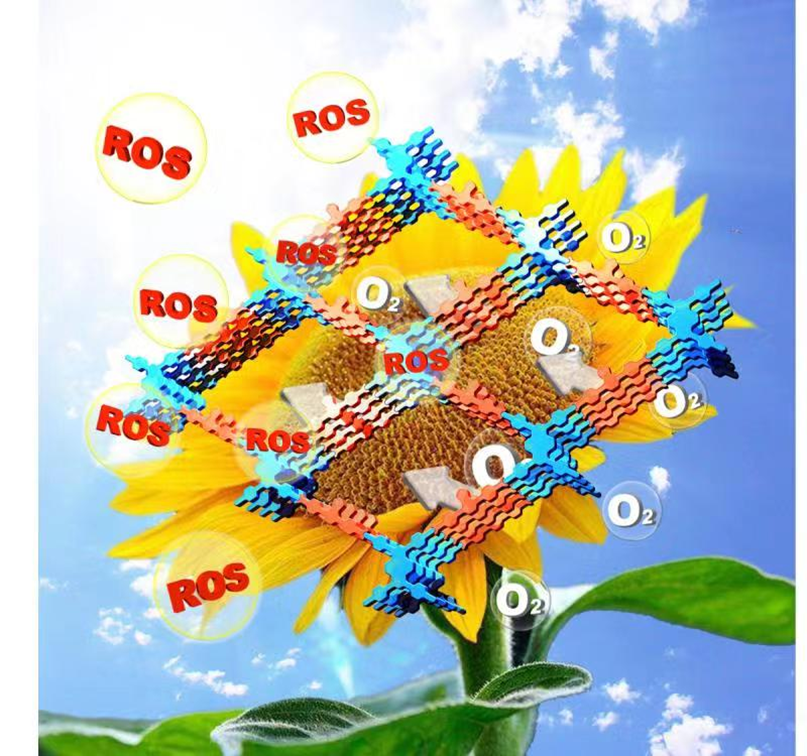
Programming covalent organicframeworks for photocatalysis:investigation ofchemical and structural variations.
Therehas been a surge of interest in light-driven chemical transformations usingorganic photoredox catalysts, whereby a suitable energyalignment and efficient exciton migration are crucial for achieving highefficiency. We show here that covalent organic frameworks (COFs) offer theflexibility required to be ideal platforms for photocatalyst design, lending themselves to finecontrol over photoreactivity. To understand the factors that dictate photoreactivity, we explore a comparative study of aseries of porous materials built with amine bonds with varied composition,crystallinity, and topology, in the efficiency of photogenerated reactive oxygen species. Combinedspectroscopies, density functional theory calculations, and catalyticevaluations revealed an essential interplay among these parameters and the photoreactivity of the resulting materials. Beyond basicconsiderations, such as spectral absorption and crystallinity, the material'slattice symmetry has a significant impact on photoreactivity. We anticipate that thestructure-performance relationships developed will provide a robust rule ofthumb for designing COF-based photocatalysts.